
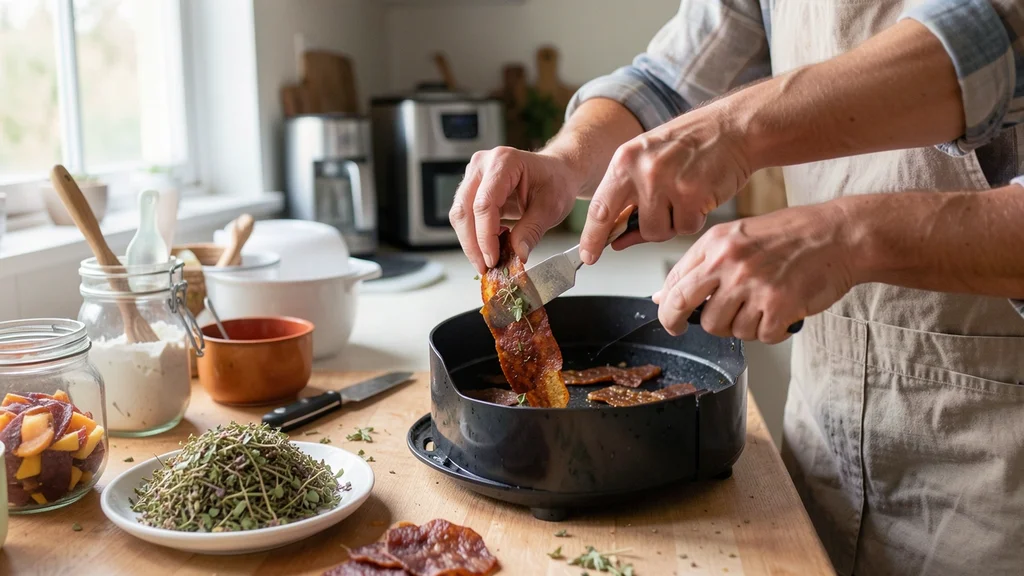
Transform your air fryer from a crispy-food maker into a versatile dehydrator. Many people are discovering the incredible ease and efficiency of how to dehydrate fruit, herbs, and jerky in an air fryer, unlocking a world of healthy snacks and preserved ingredients. This method offers a quick alternative to traditional dehydrators, often utilizing lower temperatures over extended periods to remove moisture.
Whether you’re aiming for chewy fruit leathers, aromatic dried herbs for your spice rack, or savory jerky for on-the-go energy, your air fryer can deliver impressive results with minimal fuss. Let’s explore how to make the most of this convenient kitchen appliance for all your dehydrating needs.
Yes, you can effectively dehydrate fruit, herbs, and jerky in an air fryer by using its lowest temperature setting for extended periods. Proper preparation, even heat distribution, and careful monitoring are key to achieving perfectly dried results without overcooking or burning. This method is ideal for small batches and offers a convenient way to preserve food items for snacks or cooking.
Preparing Your Air Fryer for Dehydration
Before you begin dehydrating, it’s crucial to prepare your air fryer to ensure optimal results and safety. The primary goal is to create an environment where air can circulate freely around the food, allowing moisture to escape efficiently. This often involves using parchment paper or dehydrator racks designed to fit your air fryer basket.
Most air fryers have a minimum temperature setting, typically around 150-180°F (65-82°C). This is the ideal range for dehydrating as it’s low enough to remove moisture without cooking the food. Always consult your air fryer’s manual to confirm its lowest temperature setting and any specific instructions for dehydrating.
- Cleanliness is Key: Ensure your air fryer basket, tray, and any accessories are thoroughly cleaned. Any leftover food particles can burn and impart off-flavors.
- Parchment Paper: Line your air fryer basket with parchment paper. This prevents food from sticking, makes cleanup easier, and helps catch any small pieces that might fall through. Ensure the parchment paper has holes or is trimmed to allow for air circulation.
- Dehydrator Racks: For more even drying and to maximize space, consider purchasing an air fryer dehydrator rack. These multi-tiered racks fit inside most standard air fryer baskets, allowing you to dehydrate multiple layers of food simultaneously.
- Air Circulation: Do not overcrowd the basket. Proper airflow is paramount for effective dehydration. Leave space between food items for air to circulate freely.
- Preheating (Optional): While not always necessary for dehydration, some users prefer to preheat their air fryer for 5 minutes at the target dehydrating temperature to ensure consistent heat from the start.
Dehydrating Fruits: Sweet & Chewy Snacks
Fruits are a fantastic choice for air fryer dehydration, offering a healthy and naturally sweet snack. The process concentrates their sugars, resulting in a chewy, intensely flavored treat. Berries, apples, bananas, and citrus slices all dehydrate beautifully.
The key is to slice fruits uniformly to ensure even drying. Thicker slices will take longer, while thinner slices can become brittle if overdone. A good starting point is to aim for slices about 1/4 inch thick.
Preparing Fruits for Dehydration
- Wash Thoroughly: Always wash your fruits under cool running water and pat them dry.
- Remove Pits and Seeds: For fruits like cherries or peaches, remove pits and seeds. For apples and pears, you can leave the core in if you prefer, but removing it is generally recommended for better texture.
- Uniform Slicing: Use a sharp knife or mandoline slicer to cut fruits into consistent thicknesses, ideally around 1/4 inch. This ensures all pieces dry at a similar rate.
- Prevent Browning: For fruits prone to browning, such as apples, bananas, and pears, you can dip them in a solution of equal parts lemon juice and water for a few minutes before drying.
- Citrus Zest: For citrus, you can dehydrate thin slices or peel off the zest and dry it to create a potent flavoring agent for baking and cooking.
Dehydrating Process for Fruits
Once your fruits are prepped, arrange them in a single layer on the parchment paper or dehydrator rack, ensuring no pieces overlap. Set your air fryer to its lowest temperature setting (typically 150-180°F or 65-82°C) and set the timer for 3-6 hours, depending on the fruit and thickness.
Check the fruit periodically, flipping slices halfway through the cooking time. The fruit is ready when it’s leathery and pliable but not sticky. If you prefer crispier fruit chips, you can extend the time slightly or increase the temperature cautiously.
| Fruit Type | Slice Thickness | Approximate Dehydrating Time | Notes |
|---|---|---|---|
| Apples | 1/4 inch | 4-8 hours | Dip in lemon water to prevent browning. |
| Bananas | 1/4 inch | 3-6 hours | Can become brittle if over-dried. |
| Berries (Strawberries, Blueberries) | Whole (Blueberries) or Halved (Strawberries) | 2-5 hours | Check frequently as they dry quickly. |
| Citrus (Oranges, Lemons) | 1/8 inch | 4-8 hours | Can be used for teas or garnishes. |
This table provides a starting point for dehydrating various fruits. Adjust times based on your air fryer’s performance and desired texture.
Warning: Over-drying can make fruit brittle and unappealing. Under-drying can lead to spoilage. Always aim for a leathery, pliable texture for best results.
Drying Herbs: Preserving Aromatic Flavors
Drying fresh herbs is an excellent way to preserve their flavor and aroma for use in cooking throughout the year. Air fryers can dry herbs much faster than air-drying them conventionally, making it a practical option for smaller batches.
The key to drying herbs is to use the lowest possible temperature to avoid “cooking” them, which can diminish their volatile oils and flavor. Delicate herbs like parsley and basil require lower temperatures and shorter times than heartier herbs like rosemary and thyme.
Best Herbs for Air Frying
- Hearty Herbs: Rosemary, thyme, oregano, sage, marjoram, and bay leaves are robust and tolerate slightly higher temperatures.
- Delicate Herbs: Parsley, cilantro, basil, mint, dill, and chives are more sensitive and require gentle drying at lower temperatures.
- Edible Flowers: Many edible flowers like calendula and chamomile can also be dried in an air fryer.
Preparation and Drying Techniques
For most herbs, it’s best to remove the leaves from the stems. Rinse the herbs gently and pat them completely dry with a paper towel. Excess moisture can lead to mold.
Spread the herbs in a single layer on parchment paper or a dehydrator rack. For delicate herbs, use the lowest temperature setting (around 150°F or 65°C) for 1-3 hours. For heartier herbs, you can use a slightly higher temperature (up to 180°F or 82°C) for 2-4 hours.
Check frequently to prevent them from becoming brittle and losing their flavor.
| Herb Type | Temperature (°F) | Approximate Time (Hours) | Texture Goal |
|---|---|---|---|
| Delicate Herbs (Basil, Parsley, Mint) | 150°F (65°C) | 1-3 | Dry, crumbly, but not burnt. |
| Hearty Herbs (Rosemary, Thyme, Oregano) | 160-180°F (71-82°C) | 2-4 | Dry and slightly brittle. |
Once dried, gently crumble the herbs and store them in airtight containers in a cool, dark place. They should retain their flavor for 6-12 months.
Tip: Test if herbs are fully dry by crushing a leaf between your fingers. If it crumbles easily, it’s ready. If it bends or feels leathery, it needs more time.
Making Jerky: Savory Protein Snacks
Air fryer jerky is a convenient and quick way to make this popular protein-rich snack at home. While traditional jerky making often involves long marinating times and specific dehydrators, an air fryer can speed up the process significantly.
The key to good jerky is lean meat and a flavorful marinade. The air fryer’s circulating hot air helps to dry out the meat thoroughly, creating that desirable chewy texture.
Choosing and Preparing Meat for Jerky
- Lean Cuts: Opt for very lean cuts of beef, turkey, or venison. Cuts like flank steak, sirloin, or eye of round work well. Trim away all visible fat, as fat can go rancid and spoil the jerky.
- Slice Thinly: Freeze the meat for about 1-2 hours until firm but not solid. This makes it much easier to slice thinly, ideally 1/8 to 1/4 inch thick, against the grain.
- Marinade is Crucial: A good marinade not only adds flavor but also helps tenderize the meat and can act as a preservative. Common marinade ingredients include soy sauce (or tamari for gluten-free), Worcestershire sauce, liquid smoke, spices (garlic powder, onion powder, pepper), and sweeteners (honey, maple syrup).
- Marinating Time: Marinate the meat slices for at least 4-8 hours, or preferably overnight, in a sealed bag or container in the refrigerator.
Air Frying Jerky: The Process
After marinating, drain the meat slices thoroughly and pat them dry with paper towels to remove excess marinade. Arrange the strips in a single layer on the air fryer basket or dehydrator rack, ensuring they don’t overlap. You may need to do this in batches.
Set your air fryer to its lowest temperature (150-180°F or 65-82°C) and dehydrate for 2-5 hours. The exact time will depend on the thickness of your meat and your air fryer. Flip the jerky strips halfway through the cooking time.
The jerky is done when it is dry and leathery, bending without breaking. It should still be slightly pliable.
| Meat Type | Marinade Duration | Temperature (°F) | Approximate Time (Hours) | Texture |
|---|---|---|---|---|
| Beef (Lean Cuts) | 4-24 hours | 160-180°F (71-82°C) | 2-5 | Leathery, chewy, bends without breaking. |
| Turkey (Lean Cuts) | 4-24 hours | 160-180°F (71-82°C) | 2-5 | Leathery, chewy, bends without breaking. |
Ensure your jerky is completely cooled before storing it in airtight containers. For best results and longevity, store homemade jerky in the refrigerator or freezer.
Important: Always use a meat thermometer to ensure the internal temperature of the jerky reaches at least 160°F (71°C) during the drying process to kill any potential bacteria.
Tips for Successful Air Fryer Dehydration
Achieving perfect dehydrated results in your air fryer comes down to a few key practices. Paying attention to details can make a significant difference between a successful batch and a disappointing one.
Temperature control and air circulation are your most important allies. Understanding how your specific air fryer behaves is also crucial, as models can vary in their heat distribution and temperature accuracy.
- Monitor Closely: Air fryers can fluctuate in temperature. Check your food every 30-60 minutes, especially in the later stages, to prevent over-drying or burning.
- Rotate and Flip: For even dehydration, rotate the basket or flip the food items every hour or so. If using a multi-tiered rack, rotate the racks themselves.
- Small Batches are Best: Air fryers are generally best for smaller batches. Overcrowding the basket will significantly hinder air circulation and result in unevenly dried food.
- Adjust Time Based on Food: Thicker items and those with higher water content will naturally take longer to dehydrate. Be patient and adjust times accordingly.
- Cooling is Crucial: Allow dehydrated items to cool completely on a wire rack before storing them. This final drying step prevents condensation and potential mold growth in storage.
- Proper Storage: Store dehydrated foods in airtight containers, such as glass jars or vacuum-sealed bags, in a cool, dark, and dry place. For jerky, refrigeration is recommended for longer shelf life.
- Experiment with Recipes: Don’t be afraid to experiment with different marinades for jerky, spices for herbs, or combinations of fruits.
Common Mistakes to Avoid
While air fryer dehydration is straightforward, a few common pitfalls can lead to less-than-ideal results. Being aware of these mistakes can help you achieve consistent success.
One of the most frequent errors is overcrowding the air fryer basket, which directly impacts airflow and drying efficiency. Another is setting the temperature too high, which can cook the food rather than dehydrate it.
- Overcrowding the Basket: This is the number one mistake. Food needs space for air to circulate. If the basket is too full, food will steam rather than dehydrate, leading to spoilage.
- Using Too High a Temperature: High heat will cook your food, turning it into baked or burnt items rather than dried ones. Always use the lowest setting your air fryer offers.
- Not Slicing Uniformly: Inconsistent slice thickness means some pieces will be perfectly dried while others are overdone or underdone.
- Not Trimming Fat from Meat: Fat doesn’t dehydrate well and can become rancid, spoiling your jerky and leaving an unpleasant taste.
- Storing Food While Warm: Condensation can form inside storage containers if warm food is sealed, leading to mold. Always ensure items are completely cool.
- Insufficient Drying: Under-dried food can spoil quickly. Ensure your fruit is leathery, herbs are crumbly, and jerky bends without snapping.
Frequently Asked Questions
Can I dehydrate vegetables in my air fryer?
Yes, you can dehydrate vegetables like mushrooms, zucchini, and peppers in your air fryer. Prepare them by slicing thinly and arranging them in a single layer. Use the lowest temperature setting and monitor them closely, as drying times will vary by vegetable type.
How do I know when my dehydrated food is truly dry?
For fruit, it should be leathery and pliable, with no sticky spots. Herbs should be brittle and crumble easily. Jerky should bend without snapping and feel dry to the touch.
If you live in a humid climate, it’s especially important to ensure food is thoroughly dry before storage to prevent mold.
How long does dehydrated food last?
Properly dehydrated and stored food can last for several months, sometimes up to a year, depending on the item and storage conditions. Fruit and herbs stored in airtight containers in a cool, dark place will last longer than jerky, which ideally should be refrigerated or frozen for optimal freshness and safety.
Can I use a dehydrator tray specifically designed for air fryers?
Absolutely. Air fryer dehydrator racks are excellent accessories that allow you to create multiple layers of food, significantly increasing the capacity of your air fryer for dehydration. Ensure the rack fits your specific air fryer model and allows for adequate airflow.
What is the minimum temperature needed for dehydration?
The ideal temperature range for dehydration is typically between 135°F and 160°F (57°C to 71°C). Most air fryers’ lowest setting is around 150-180°F (65-82°C), which is generally suitable, though it’s best to use the lowest setting available on your appliance to avoid cooking the food.
Final Thoughts
Mastering how to dehydrate fruit, herbs, and jerky in an air fryer opens up a world of delicious and healthy possibilities. With a little preparation and attention to detail, you can create your own dried snacks and ingredients with ease. Embrace the convenience and enjoy the satisfying results of your air fryer’s multi-talented capabilities.