
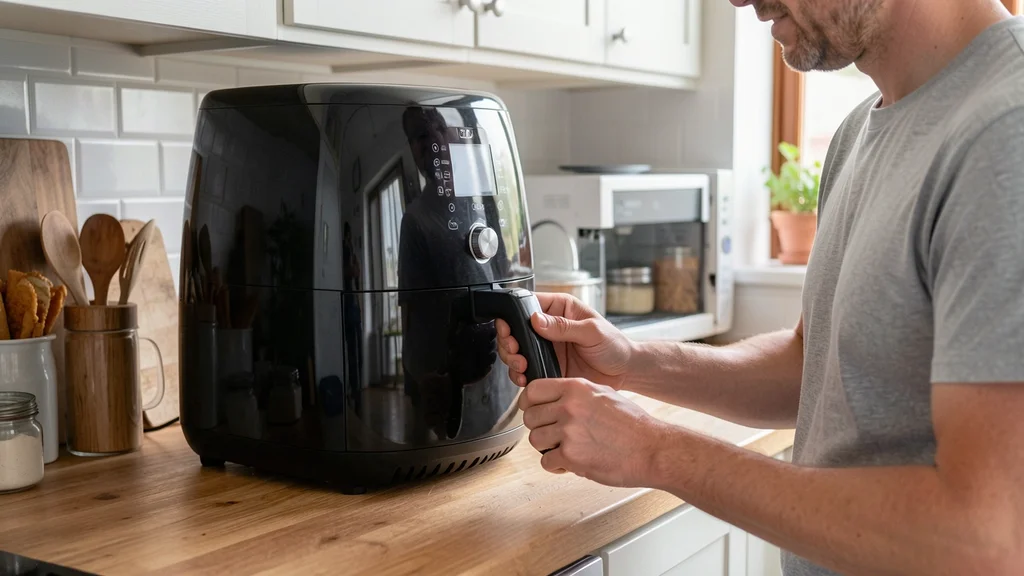
Many home cooks are curious about the energy consumption of their kitchen appliances, and air fryers are no exception. As these versatile gadgets become increasingly popular for their ability to crisp food quickly and with less oil, a common question arises: do air fryers use a lot of electricity? Understanding the real energy costs associated with your air fryer can help you make informed decisions about your kitchen habits and your electricity bill. This post will break down how air fryers use power, compare them to other cooking methods, and offer tips for energy-efficient use.
Air fryers use a moderate amount of electricity, generally less than conventional ovens for smaller portions but more than microwaves. Their wattage is higher than many small appliances, but their shorter cooking times often result in lower overall energy consumption compared to longer oven cycles.
Air Fryer Wattage and Energy Use
Air fryers operate by circulating hot air at high speed around the food, mimicking the results of deep-frying. This process requires a heating element and a fan, both of which consume electricity. The wattage of an air fryer is a key indicator of its power draw. Most air fryers range from 1000 to 1800 watts, with larger models or those with more features potentially drawing even more. To put this into perspective, a typical microwave might be around 1000-1500 watts, while a full-sized oven can range from 2000 to 5000 watts or more.
The actual energy consumed by an air fryer is calculated by its wattage multiplied by the time it’s in use, then divided by 1000 to convert to kilowatt-hours (kWh). For example, a 1500-watt air fryer running for 10 minutes (0.167 hours) would use 1500 watts * 0.167 hours = 250.5 watt-hours, or 0.25 kWh. The cost of this energy depends on your local electricity rates, which can vary significantly. For instance, if your electricity costs $0.15 per kWh, running that air fryer for 10 minutes would cost approximately $0.0375.
Factors Influencing Air Fryer Energy Consumption
Several factors directly impact how much electricity your air fryer uses:
- Wattage: Higher wattage appliances consume more power per hour.
- Cooking Time: Shorter cooking times mean less overall energy used, even with high wattage.
- Temperature Setting: Higher temperatures require the heating element to work harder and for longer periods.
- Basket Size and Load: Overloading the basket can lead to uneven cooking and longer cook times, increasing energy use. Conversely, cooking very small batches might be less efficient than using a microwave.
- Preheating: Some air fryers require preheating, which adds to the total energy consumption.
Air Fryer Electricity Cost
Energy per use: — kWh
Comparing Air Fryer Energy Use to Other Appliances
A common point of comparison is the conventional oven. While an air fryer has a high wattage, its compact size and efficient heating element mean it often cooks food faster. For smaller meals or snacks, an air fryer can be significantly more energy-efficient than preheating and running a large oven. For example, cooking a batch of chicken wings in an air fryer for 20 minutes might use less energy than a 45-minute bake in a full-sized oven. However, for large meals that fill an entire oven or require very long cooking times (like roasts), the oven might be more economical.
Microwaves are generally the most energy-efficient for reheating or cooking small items due to their speed and targeted heating. However, they don’t provide the same crispy texture that air fryers excel at. Toasters and toaster ovens fall somewhere in between, with their energy usage depending heavily on their wattage and how long they are used.
Energy Consumption Breakdown: Air Fryer vs. Oven vs. Microwave
To illustrate the differences, consider these typical scenarios:
| Appliance | Typical Wattage | Typical Cook Time | Estimated kWh per Use (for example) | Energy Efficiency Notes |
|---|---|---|---|---|
| Air Fryer (small batch) | 1500 W | 15 minutes | 0.375 kWh | Efficient for small portions, faster than oven. |
| Conventional Oven | 3000 W | 30 minutes (including preheat) | 1.5 kWh | Less efficient for small items; better for large batches. |
| Microwave | 1200 W | 5 minutes | 0.1 kWh | Most efficient for reheating and small tasks, but doesn’t crisp. |
This comparison highlights how cooking time and batch size significantly influence overall energy consumption, making the air fryer a strong contender for everyday cooking.
The Cost of Running an Air Fryer
Calculating the actual cost involves a few steps. First, find out your electricity rate per kWh from your utility bill. For example, if your rate is $0.20 per kWh:
- Running a 1500W air fryer for 15 minutes (0.25 hours) costs: 1.5 kW 0.25 h $0.20/kWh = $0.075.
- Running a 3000W oven for 30 minutes (0.5 hours) costs: 3.0 kW 0.5 h $0.20/kWh = $0.30.
In this scenario, the air fryer is considerably cheaper to run for this specific task.
| Appliance | Cost per 30 Minutes of Use (at $0.20/kWh) |
|---|---|
| Air Fryer (1500W, running full time) | $0.15 |
| Conventional Oven (3000W, running full time) | $0.30 |
| Microwave (1200W, running full time) | $0.08 |
These figures demonstrate that while air fryers use more power per hour than microwaves, their efficiency in cooking smaller portions often makes them a cost-effective choice.
Maximizing Energy Efficiency with Your Air Fryer
To ensure your air fryer is as energy-efficient as possible, consider these practical tips:
- Cook in Batches Wisely: For small portions, the air fryer is excellent. For larger meals, consider if your oven is more suitable.
- Don’t Overcrowd the Basket: Ensure air can circulate freely for faster, more even cooking, reducing overall time and energy use.
- Utilize the Right Temperature: Stick to recommended cooking temperatures. Higher isn’t always better and wastes energy.
- Consider Preheating: If your recipe calls for preheating, do it. However, some foods, like frozen items, don’t require it and can be placed directly into a cold air fryer.
- Keep it Clean: A clean air fryer basket and interior can help maintain optimal cooking performance and efficiency.
- Match Size to Need: If you often cook for one or two, a smaller capacity air fryer might be more energy-efficient than a large one.
When to Choose an Air Fryer Over Other Appliances
The air fryer shines in specific cooking scenarios:
- Crisping and Browning: Achieving a golden-brown, crispy exterior on foods like fries, chicken wings, or vegetables.
- Quick Snacks: Heating up small portions of snacks or appetizers rapidly.
- Roasting Small Vegetables: Cooking items like broccoli florets or Brussels sprouts to perfection in minutes.
- Reheating Fried Foods: Bringing leftover fried items back to life without making them soggy.
- Cooking Frozen Foods: Many frozen appetizers and snacks cook beautifully and quickly in an air fryer.
Common Misconceptions About Air Fryer Energy Use
One of the biggest misconceptions is that because air fryers have high wattage, they automatically consume a lot of electricity. This overlooks the critical factor of cooking time. A high-wattage appliance that runs for a short period can use less energy overall than a lower-wattage appliance that runs for much longer. For instance, a 1500W air fryer running for 10 minutes uses less energy than a 1000W toaster oven running for 30 minutes.
Another misconception is that air fryers are always more energy-efficient than conventional ovens. While this is often true for small portions, it’s not a universal rule. If you’re cooking a large turkey or a big batch of cookies, a conventional oven is likely the more energy-efficient choice due to its larger capacity and potentially more even heat distribution for large items.
Understanding Energy Labels and Ratings
In some regions, appliances come with energy efficiency labels that provide estimated annual energy consumption or an energy star rating. While not all air fryers have these labels, looking for them can offer a comparative insight. These labels are based on standardized testing and can give you a general idea of an appliance’s energy footprint. However, remember that real-world usage can vary significantly based on how you use the appliance.
The Environmental Impact of Air Fryer Usage
The energy consumed by any appliance contributes to its overall environmental impact. By using an air fryer efficiently, you can reduce your household’s carbon footprint. Choosing an air fryer over a conventional oven for smaller tasks is a step towards more sustainable cooking. According to the U.S. Environmental Protection Agency, residential buildings account for a significant portion of energy consumption, so making conscious choices about appliance use is important. For example, if a household switches from using a full-size oven for small tasks to an air fryer, they could see a reduction in their energy bills and their contribution to greenhouse gas emissions.
Statistics on Appliance Energy Consumption
The U.S. Department of Energy estimates that lighting and appliances account for about 20% of the average household’s energy bill.
A typical full-sized oven can consume between 2,000 and 5,000 watts, while a standard air fryer uses between 1,000 and 1,800 watts.
Studies suggest that for cooking small to medium-sized meals, an air fryer can be up to 50% more energy-efficient than a conventional oven due to its faster cooking times and smaller heating element.
The average cost of electricity in the United States is approximately $0.14 per kWh, but this can fluctuate significantly by state.
Frequently Asked Questions
Do air fryers use more electricity than toaster ovens?
Typically, air fryers and toaster ovens have similar wattage ranges. The difference in electricity usage often comes down to cooking time and efficiency. Air fryers are designed for rapid air circulation, which can lead to faster cooking for certain foods, potentially using less energy overall than a toaster oven for the same task.
Is it cheaper to use an air fryer or a microwave?
For reheating small portions of food or cooking items that don’t require crisping, a microwave is generally more energy-efficient and cheaper to run due to its lower wattage and very short cooking times. However, for achieving crispy textures, an air fryer is more effective and can be more energy-efficient than using a conventional oven for small batches.
Can a high-wattage air fryer damage my home’s electrical system?
Most standard home electrical circuits can handle the wattage of typical air fryers (1000-1800W). However, if you have older wiring or consistently run multiple high-wattage appliances on the same circuit simultaneously, you might encounter issues like tripped breakers. It’s always a good idea to check your home’s electrical capacity or consult an electrician if you have concerns.
How much does it cost to run an air fryer for an hour?
If you have a 1500-watt air fryer and your electricity costs $0.20 per kWh, running it for a full hour would cost: 1.5 kW 1 hour $0.20/kWh = $0.30. However, most air fryer tasks take much less than an hour, making the per-use cost quite low.
Are there energy-saving modes on air fryers?
Some modern air fryers may offer “eco” or energy-saving modes, but these are not standard. The primary way to save energy with an air fryer is through mindful usage: cooking appropriate batch sizes, not overcooking, and using it for tasks where it excels over larger appliances.
Final Thoughts
In conclusion, while air fryers do have a significant wattage, they generally do not use a lot of electricity when compared to conventional ovens for smaller cooking tasks. Their efficiency stems from their ability to cook food quickly and evenly with hot air circulation. By understanding their energy consumption and employing smart cooking habits, you can enjoy the convenience and delicious results of your air fryer while keeping your electricity bills and environmental impact in check.