
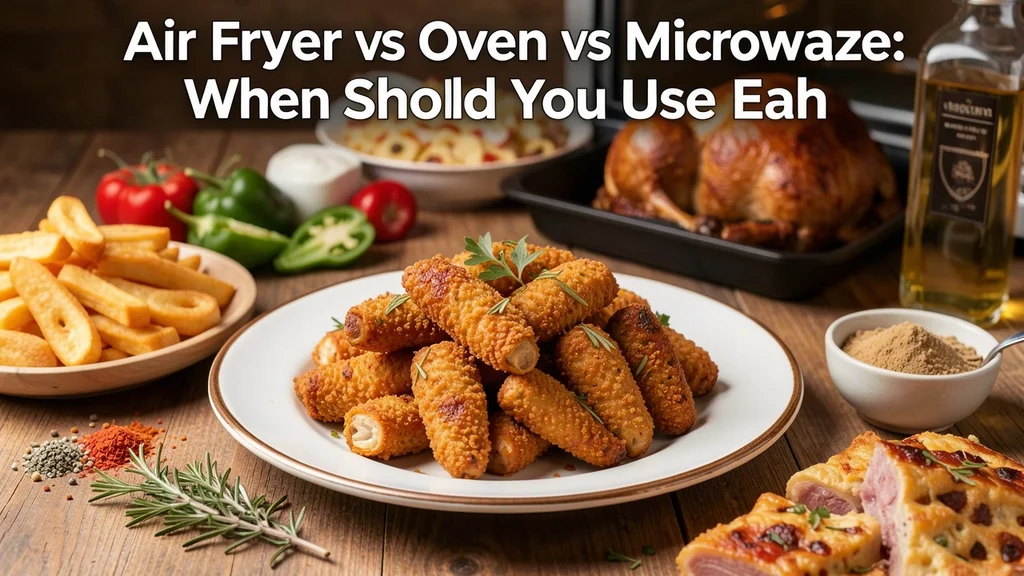
Choosing the right cooking appliance can significantly impact your meal’s outcome, energy efficiency, and preparation time. In many kitchens, the air fryer, conventional oven, and microwave coexist, each offering unique benefits. Understanding the strengths and weaknesses of the Air Fryer vs Oven vs Microwave dynamic is key to making informed decisions for everyday cooking.
This guide will break down when to reach for each appliance, helping you cook smarter, faster, and more effectively for any culinary task.
The air fryer excels at crisping and browning with less oil, the oven is best for larger batches and consistent baking, while the microwave is unparalleled for rapid reheating and quick cooking of specific items. Each has distinct advantages depending on your goal.
The Air Fryer A Master of Crispy Textures
The air fryer, often described as a powerful countertop convection oven, uses rapid hot air circulation to cook food. Its primary advantage lies in its ability to achieve a crispy, fried texture with a fraction of the oil used in traditional deep-frying. This makes it a popular choice for health-conscious individuals who still crave the satisfaction of crunchy foods.
Its compact size and quick preheating time also make it incredibly convenient for smaller meals or snacks. From perfectly seasoned chicken wings to surprisingly good roasted vegetables, the air fryer can transform simple ingredients into delicious dishes with minimal effort. It’s ideal when you need speed and a satisfying crunch.
- Fast Cooking Times: Air fryers preheat much faster than conventional ovens, often in 3-5 minutes.
- Healthier “Frying”: Achieves crispy exteriors with significantly less oil, reducing fat content.
- Versatile for Snacks: Excellent for reheating leftovers like pizza or fries to restore crispness.
- Even Browning: The circulating hot air ensures food is cooked and browned uniformly.
- Easy Cleanup: Most air fryer baskets and trays are dishwasher-safe.
| Best For | Not Ideal For |
|---|---|
| Chicken wings, french fries, onion rings, spring rolls, breaded items. | Large roasts, whole cakes, items requiring very wet batters, large family portions. |
When you want that satisfying crunch without the deep-fried guilt, the air fryer is your go-to appliance.
The Conventional Oven The Reliable Workhorse
The conventional oven, whether gas or electric, remains a cornerstone of most kitchens for good reason. Its large capacity and consistent, even heat distribution make it perfect for a wide range of cooking and baking tasks, especially those involving larger quantities or delicate preparations.
Whether you’re baking a cake, roasting a holiday turkey, or preparing a sheet pan dinner for the whole family, the oven’s spacious interior and reliable temperature control are indispensable. While it takes longer to preheat and cook compared to an air fryer or microwave, the results are often superior for traditional baking and slow-cooking methods.
- Large Capacity: Accommodates large dishes, multiple trays, or big cuts of meat.
- Consistent Baking: Ideal for cakes, cookies, bread, and pastries requiring precise temperature.
- Roasting Power: Excellent for achieving tender, juicy results with meats and vegetables.
- Versatile Functions: Many ovens offer broil, convection bake, and dehydrate settings.
- Energy Efficient for Batches: More efficient for cooking large amounts of food at once.
| Ideal For | Less Suitable For |
|---|---|
| Baking cakes, pies, bread; roasting whole chickens or turkeys; large casseroles; sheet pan dinners. | Quick reheating of single servings; achieving super-crispy textures with minimal oil; very small snacks. |
For tasks requiring space, even heat, and the ability to cook for a crowd, the conventional oven is the undisputed champion.
The Microwave The Speed King
The microwave oven revolutionized kitchens with its incredible speed. It uses microwave radiation to heat food by exciting water molecules, making it the fastest option for reheating leftovers, defrosting frozen items, and cooking certain types of food like vegetables or popcorn.
While it may not excel at creating crispy textures or complex baked goods, its convenience for quick meals, steaming vegetables, or simply warming up a mug of coffee is unmatched. It’s the appliance of choice when time is of the essence and perfect texture isn’t the top priority.
- Unbeatable Speed: Reheats and cooks food in a fraction of the time compared to other appliances.
- Defrosting Power: Quickly thaws frozen meats, vegetables, and other items.
- Energy Efficient for Small Tasks: Uses less energy for short cooking or reheating periods.
- Steaming Capabilities: Excellent for quickly steaming vegetables to retain nutrients.
- Simple Operation: Easy to use with basic controls for time and power level.
| Primary Uses | Limitations |
|---|---|
| Reheating leftovers, defrosting, cooking vegetables, making popcorn, heating beverages. | Achieving crispy textures, baking delicate items, cooking large roasts, even browning. |
For instant gratification and speedy meal preparation, the microwave is the undisputed champion of convenience.
When to Choose Which Appliance: A Decision Guide
The choice between your air fryer, oven, and microwave often comes down to the desired outcome and the type of food you’re preparing. Understanding their core strengths will help you select the best tool for the job, saving you time and ensuring delicious results.
Consider the following scenarios to guide your decision-making process:
- For Crispy Snacks and Appetizers: If you’re craving golden-brown, crunchy delights like chicken wings, fries, or mozzarella sticks, the air fryer is your best bet. It delivers that satisfying crispness with minimal oil, something neither the oven nor microwave can replicate as effectively.
- For Baking and Roasting Large Items: When it comes to baking cakes, pies, bread, or roasting a whole chicken or turkey, the conventional oven is essential. Its consistent, all-around heat and large capacity are necessary for even cooking and achieving the desired texture in these types of dishes.
- For Quick Reheating and Defrosting: If you need to quickly reheat leftovers, thaw a frozen meal, or warm up a beverage, the microwave is the undisputed winner. Its speed and efficiency for these tasks are unmatched by the other appliances.
- For Weeknight Dinners and Batch Cooking: For family meals, sheet pan dinners, or cooking multiple items simultaneously, the oven is generally the most suitable. While an air fryer can handle some batch cooking, the oven’s capacity and even heat distribution are superior for full meals.
- For Healthier Fried Foods: If you love the taste of fried foods but want a healthier alternative, the air fryer is the clear choice. It mimics the texture of deep-frying with significantly less fat.
- For Steaming Vegetables: While an oven can roast vegetables and a microwave can steam them, the microwave is often the quickest and most efficient way to steam vegetables while preserving nutrients.
Warning: Do not use metal in the microwave unless the microwave is specifically designed for it. This can cause sparks and damage the appliance. Always check your microwave’s manual for material guidelines.
Comparing Cooking Methods and Energy Use
Beyond just cooking results, it’s worth considering the energy efficiency and cooking times of each appliance. This can impact your electricity bills and how quickly you can get a meal on the table.
Here’s a general comparison:
| Appliance | Typical Cooking Time | Energy Use (General) | Best For |
|---|---|---|---|
| Microwave | Minutes | Low (for short tasks) | Reheating, defrosting, quick steaming |
| Air Fryer | 10-30 minutes | Medium (efficient for small batches) | Crisping, small batch cooking, snacks |
| Conventional Oven | 30+ minutes (plus preheat) | High (especially for long cooks or large batches) | Baking, roasting, large batch cooking |
According to the U.S. Department of Energy, ovens can consume between 2,000 and 5,000 watts, while microwaves typically range from 700 to 1,200 watts. Air fryers fall somewhere in between, often using 1,400 to 1,700 watts.
For small, quick tasks, the microwave is the most energy-efficient. For cooking larger meals, a preheated oven might be less efficient than using an air fryer for specific components if it means a shorter overall cooking time or avoiding heating the entire kitchen.
Tip: Consider using your air fryer for smaller portions or side dishes instead of heating up the large oven, especially during warmer months, to save energy and keep your kitchen cooler.
Tips for Maximizing Each Appliance
To get the most out of your air fryer, oven, and microwave, a few smart strategies can make a significant difference in your cooking experience.
- Air Fryer Tips:
- Don’t overcrowd the basket; food needs space for air circulation.
- Shake the basket halfway through cooking for even crisping.
- Use a small amount of oil for best results, especially for raw ingredients.
- Clean the basket and tray after each use to prevent residue buildup.
- Oven Tips:
- Preheat the oven thoroughly before placing food inside.
- Use oven thermometers to ensure accurate temperature readings.
- Rotate pans halfway through baking for even browning.
- For roasting, allow meats to rest after cooking for juicier results.
- Microwave Tips:
- Use microwave-safe dishes and cover food to prevent splattering.
- Stir food halfway through cooking to ensure even heating.
- Avoid cooking foods that require crisping or browning.
- Defrosting: Use the defrost setting or cook in short intervals, turning food often.
By implementing these simple tips, you can enhance the performance and longevity of each appliance, leading to better meals and a more efficient kitchen workflow.
Common Mistakes to Avoid
Even with the best appliances, certain common mistakes can lead to disappointing results. Understanding these pitfalls can help you avoid them and achieve consistent success in your cooking.
Mistakes with Air Fryers
- Overcrowding: This is the most common error. It prevents hot air from circulating, leading to uneven cooking and soggy food.
- Not Shaking the Basket: For items like fries or wings, forgetting to shake the basket halfway through results in uneven crisping.
- Using Too Much Oil: While some oil is good for crisping, excessive amounts can lead to smoking and defeat the purpose of healthier cooking.
Mistakes with Ovens
- Not Preheating Properly: Placing food in a cold oven leads to longer cooking times and inconsistent results, especially for baked goods.
- Opening the Door Too Often: Each time the oven door is opened, the temperature drops significantly, affecting cooking time and quality.
- Incorrect Rack Placement: The position of the rack affects heat exposure; for example, baking cakes on the middle rack is usually best.
Mistakes with Microwaves
- Using Metal Utensils: This is dangerous and can damage the microwave.
- Overcooking: Microwave cooking can be very fast; overcooking leads to dry or rubbery food.
- Uneven Heating: Not stirring or rotating food can result in hot spots and cold spots.
Important: Always refer to your appliance’s user manual for specific instructions and safety guidelines. Each model can have unique features and operational requirements.
Frequently Asked Questions
When is an air fryer better than an oven?
An air fryer is better when you want to achieve a crispy texture quickly for smaller portions, like fries, wings, or reheating leftovers. It uses less energy for small batches and preheats much faster than a conventional oven.
Can a microwave cook food as well as an oven?
No, a microwave cooks food differently. It excels at rapid reheating and steaming by exciting water molecules, but it cannot achieve the browning, crisping, or even baking results that an oven provides due to its cooking mechanism.
Is it more energy-efficient to use an air fryer or an oven for small meals?
Generally, an air fryer is more energy-efficient for small meals or snacks because it heats up faster and uses less overall power than a full-sized oven. However, for very small tasks like reheating a single item, a microwave is usually the most energy-efficient option.
What types of food should never be cooked in a microwave?
Foods that require crisping or browning, such as steak, whole roasts, or delicate pastries, are not ideal for microwaves. Also, certain items like whole eggs in their shell or grapes can be problematic due to how they heat and expand.
Can I use aluminum foil in my air fryer or oven?
Yes, you can generally use aluminum foil in both ovens and air fryers, but with caveats. In ovens, it’s common for lining pans. In air fryers, it’s best to line the bottom of the basket or tray if needed, ensuring it doesn’t block airflow.
Always check your specific appliance manual, as some manufacturers advise against it to maintain optimal performance.
Final Thoughts
The Air Fryer vs Oven vs Microwave debate isn’t about which appliance is superior, but rather understanding their unique strengths. The air fryer offers speed and crispiness, the oven provides capacity and consistent baking/roasting, and the microwave delivers unparalleled speed for reheating and defrosting. By choosing the right tool for each culinary task, you can optimize your cooking, save time, and enjoy better results.